
5 reasons European formula could be the right choice for your baby

Written by
ZOF Support
Published on
January 10, 2026
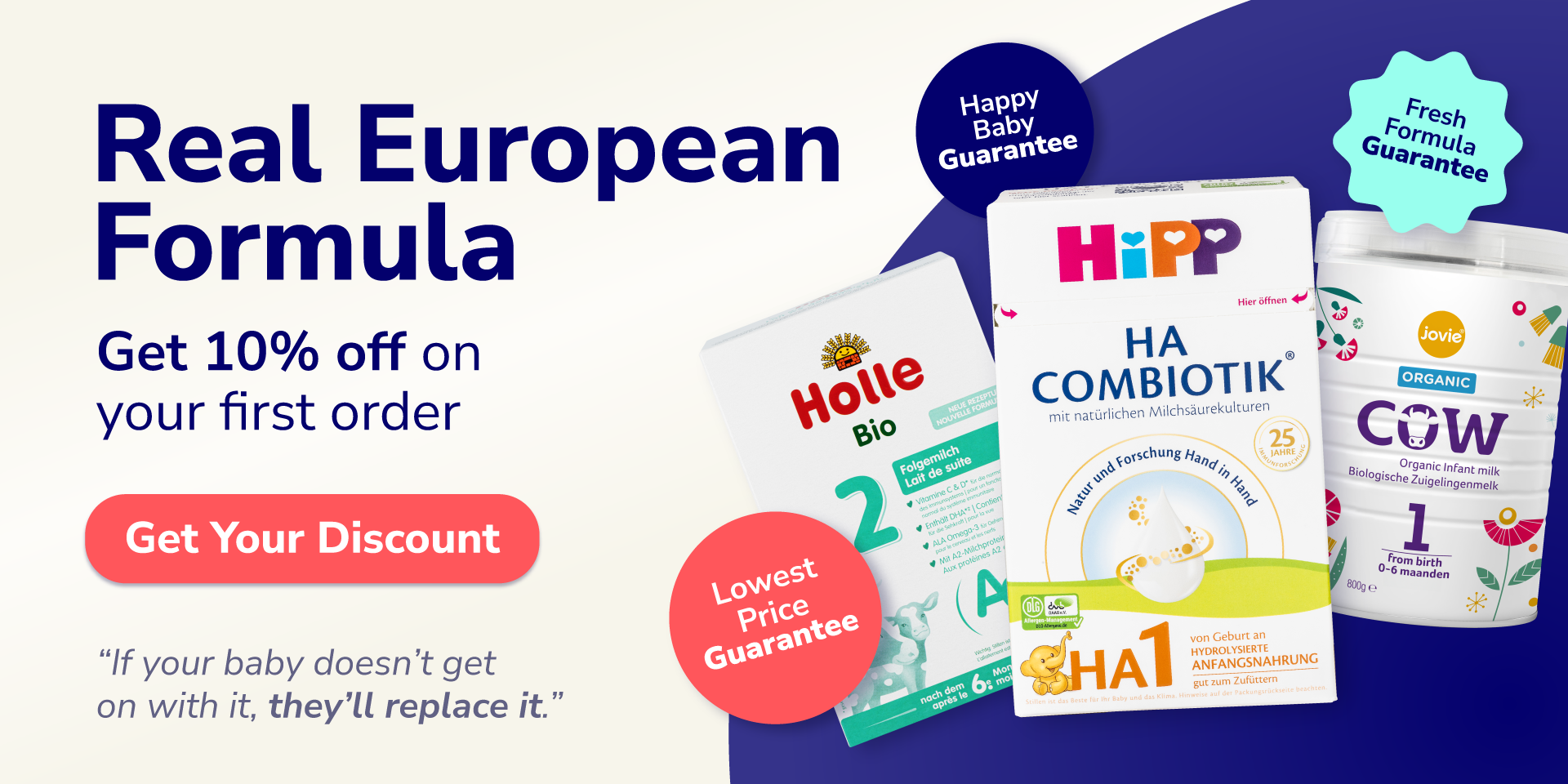
We often say that European formulas are ‘closer to breastmilk’. We also say that they’re cleaner and more nutritious.
In this post, we’ll go through the 5 key reasons why we make these claims, including details of the nutritional differences between European formulas and standard, store-bought formulas.
It’s also worth remembering that these 5 nutritional differences aren’t due to chance. They’re a result of strict European regulations for formula, designed specifically to make sure it’s as close to breastmilk as it can be.
Here are the 5 reasons European formula could be the right choice for your baby:
-
They use natural lactose, not corn syrup or other sugars
-
They include pre and probiotics for gut health
-
They’re easier to digest (especially gentle goat’s milk options)
-
They include DHA and ARA for brain and eye health
-
They don’t include GMOs or pesticides
1) They use natural lactose, not corn syrup or other sugars
Breastmilk is naturally high in sugar. This might sound surprising, but the sugar in question is lactose, a naturally occurring sugar found in all mammals’ milk. Human milk has particularly high lactose levels – around 7%, compared to around 5% for cows.
This makes it an especially important formula ingredient. Babies need the energy and calories they get from lactose to grow healthily, and it’s also good for their gut, helping them absorb other nutrients more effectively.
For this reason, EU rules state that formula should provide at least 30% of its calories from lactose, around the same percentage as breastmilk. But outside the EU, some formula manufacturers use cheaper sugars, including corn syrup solids or glucose. These sugars give babies the basic energy they need, but they don’t provide the extra nutritional benefits that lactose does, and they can be harder to digest.
Unlike lactose, they can also taste noticeably sweet, which can mean that babies develop a sweeter tooth than they would otherwise. They can also spike blood sugar in a way that lactose doesn’t.
To find out more about lactose and why it’s so good for babies, check out this blog.
You can also read more about corn syrup in formula, and why you should avoid it, here.
2) They include pre and probiotics for gut health
Breastmilk has the ability to help babies develop a healthy gut microbiome, thanks to its natural prebiotics and probiotics. These feed the good bacteria that are vital for gut health throughout life, and they also help babies develop a strong immune system.
Most European formulas contain prebiotics, probiotics or both. Though EU regulations don’t specifically require them, most EU formula brands include them as they’re keen to make sure their formulas are as close to breastmilk as possible.
HiPP German formula even contains natural lactic acid probiotics cultured from real breastmilk.
To find out more about probiotics in formula, and why they’re so important for your baby, read this blog.
3) They’re easier to digest (especially gentle goat’s milk options)
Many babies find it difficult to digest standard formulas, which can show up as colic and poor sleep as well as the more obvious gas and tummy upsets. Parents who switch to European formula often find that these symptoms improve. Some of this is due to the higher lactose content vs other sugars, and the inclusion of pre and probiotics.
It can also be because European formulas are often starch-free, or include only a mild organic starch which tends to be much easier to digest.
And sometimes, it’s because they’ve chosen a goat’s milk formula. Goat’s milk is naturally gentler and easier to digest than cow’s milk, because it has the same type of protein as breastmilk. This is the A2 protein – found in human and most animal milk.
Most cow’s milk includes only the A1 protein. That’s not a problem for all babies, but some find it really hard to digest since it’s different to breastmilk. Some cow’s milk does contain A2, and EU formula manufacturers also offer A2 cow’s milk formulas as an alternative to goat’s milk.
We offer goat’s milk formulas from several premium brands, including Jovie, Kabrita, Nannycare, HiPP and Holle. We also have Holle A2 formulas.
You can read more about goat’s milk formulas, and the reasons parents choose them, here.
4) They include DHA and ARA for brain and eye health
Breastmilk contains essential fatty acids, DHA (docosahexaenoic acid) and ARA (arachidonic acid), which are crucial for brain and eye development. You might know them as omega-3 and omega-6.
EU regulations mean that all European formula must contain DHA, and nearly all brands choose to include ARA too. In contrast, the FDA doesn’t require DHA inclusion in formula. Many US brands do have it, but there’s no minimum quantity and you can’t be certain any particular brand will have it.
If you’re vegetarian, you might be concerned about the fact that DHA often comes from fish oil. But there are alternatives, with some formulas, including all Kendamil formulas, using vegetarian DHA from algae instead.
To read more about DHA and ARA, including why they’re vital, check out this blog.
5) They don’t include GMOs or pesticides
EU regulations around GMOs and pesticides are especially strict. Most of the formulas in our store are organic, and so you’d probably expect them not to include these.
But you don’t actually have to choose a certified organic formula to avoid them. All European formulas, organic certification or not, are guaranteed not to include GMOs or pesticides.
GMOs are very strictly regulated in general in the EU in all foods (not just in formula). Where they are used, they must be labeled, so consumers can make an informed choice.
And for baby formula, GMOs are completely banned in the EU. Regulators considered that there just isn’t enough information on the long-term effects of them on babies’ developing bodies and brands for them to be safely used. So any European formula you choose will be free of them.
When it comes to pesticides, EU rules only allow them to be present in ‘undetectable amounts’, which essentially means they can’t be used to farm the raw ingredients for formula.
You can read more about GMOS in formula and whether they’re dangerous for your baby here.
The best choice for your baby?
When you choose European formula, you can be 100% confident that your baby won’t be fed GMOs, corn syrup or other potentially harmful ingredients. You’ll also know that the formula you choose is as close to breastmilk as it can be.
While it is possible to find formula made outside the EU that’s similar, it’s more difficult. And there are no guarantees.
It’s also surprisingly easy to order from the EU, and you’ll get your tariffs paid as long as you order $250+.
Want to see which European formula is right for your baby? Get 3 personalized recommendations in 1 minute using our Formula Finder tool.